
Shopping for a foreign-used (tokunbo) SUV in Nigeria can feel like navigating an automotive minefield.
With soaring import costs, unpredictable fuel prices, and punishing road conditions, making the wrong choice can trap you in a cycle of endless mechanic visits, exorbitant spare part bills, and devastating depreciation. Many buyers fall for depreciated European luxury SUVs, only to park them within months due to blown air suspension bags, complex electrical faults, or fragile turbochargers.
To survive and thrive on Nigerian roads, an SUV must strike a delicate balance: commanding ground clearance, durable suspension, accessible spare parts, robust V6 power, and strong long-term value.
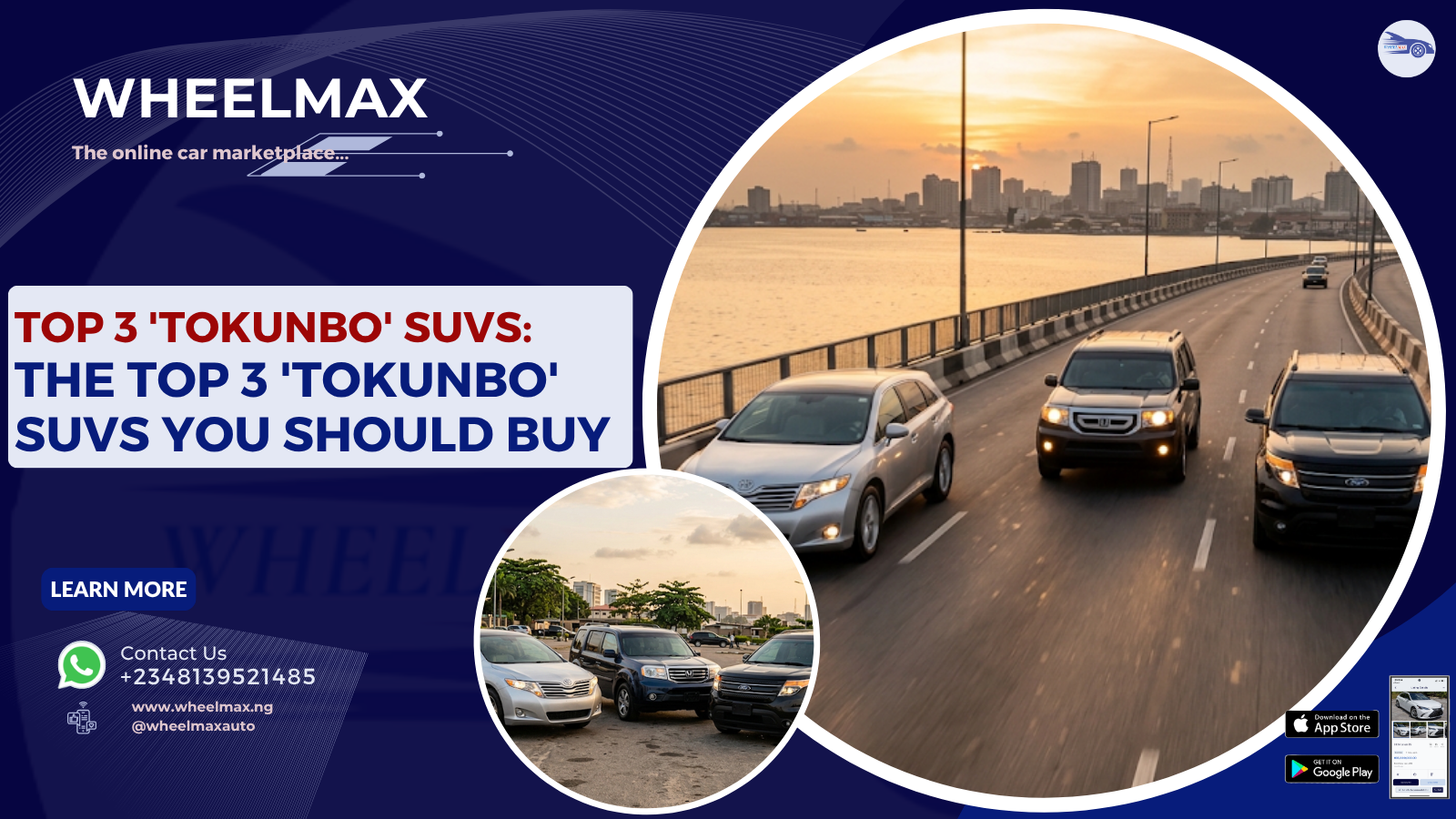
Three models consistently rise to the top of the pre-owned market by ticking these boxes for three distinctly different types of drivers: the Toyota Venza, the Honda Pilot, and the Ford Explorer.
Below is an honest, engineering-backed breakdown of each vehicle, examining their real-world pros, cons, and who should actually buy them in Nigeria.
1. Toyota Venza (2010–2015): The Executive Style Benchmark
Manufactured in Kentucky for the North American market, the first-generation Toyota Venza is not a traditional boxy SUV. Instead, it is an executive crossover built on the mechanical architecture of the Toyota Camry and Highlander. It remains the gold standard for Nigerian professionals seeking curbside status, car-like handling, and bulletproof reliability.
The Specs:
1. Engine: 3.5L 2GR-FE naturally aspirated V6 (268 hp) or 2.7L 4-Cylinder (182 hp)
2. Transmission: 6-Speed Electronically Controlled Automatic
3. Seating Capacity: 5 Passengers (2 rows)
4. Ground Clearance: 8.1 inches (205 mm)
The Pros:
1. Unmatched Spare Parts Availability: Because the Venza shares brake pads, steering racks, suspension linkages, and engine sensors with the Camry, Highlander, and Lexus RX 350, parts are universally stocked across Ladipo, Trade Fair, and Apo Mechanic Village. Any roadside technician can service it.
2. Limousine-Grade Rear Legroom: Lacking a cramped third row, the rear cabin features a completely flat floor with zero center hump, reclining seatbacks, and executive-level legroom that comfortably seats three adults.
3. Bulletproof Timing Chain V6: The 3.5L V6 uses an internal heavy-duty steel timing chain designed to last the engine’s lifetime, avoiding the risk of snapped rubber timing belts.
4. Exceptional Resale Liquidity: The Venza acts almost like cash in Nigeria. It depreciates exceptionally slowly in local currency terms and can easily be resold within days.
5. High Ground Clearance: At 8.1 inches, it easily clears high municipal speed bumps and seasonal floodwaters that scrape ordinary saloons.
The Cons:
1. Harsh Ride on Factory 20-Inch Rims: V6 models come standard with low-profile tires wrapped around 20-inch alloy rims. The thin sidewalls transmit sharp road shocks into the cabin and are prone to pothole-induced sidewall bubbles.
2. Intermediate Steering Shaft Clunk: A common Toyota K-platform issue where the steering column develops a dull clicking sound over unpaved washboard surfaces.
3. Water Pump Seepage: The 3.5L V6 water pump typically begins weeping coolant residue around 130,000 to 160,000 km, requiring proactive replacement.
4. Strictly a 5-Seater: Large or extended families cannot configure it with a third row.
Who Should Buy It?
Upwardly mobile professionals, corporate executives, and small families who want head-turning road presence, low maintenance stress, and rock-solid resale value, but do not need more than five seats.
2. Honda Pilot (2012–2015): The Ultimate Family Space Champion
The facelifted second-generation Honda Pilot was engineered in Alabama specifically for suburban utility. Its unapologetically boxy, upright design translates into unmatched interior volume, making it the most sensible multi-passenger hauler for practical Nigerian families.
The Specs:
1. Engine: 3.5L J35 naturally aspirated i-VTEC V6 (250 hp)
2. Transmission: 5-Speed Heavy-Duty Automatic
3. Seating Capacity: True 8 Passengers across 3 rows (2+3+3 layout)
4. Ground Clearance: 8.0 inches (203 mm)
The Pros:
1. Genuine Adult-Sized Third Row: Unlike "5+2" crossovers where the third row is a cramped footwell for toddlers, the Pilot's upright roofline allows full-grown adults to sit in all three rows comfortably.
2. Massive Price Advantage vs. Highlander: On the Nigerian pre-owned market, a clean tokunbo Pilot sells for 20% to 30% less than an equivalent-year Toyota Highlander, offering more cabin space and seats for significantly less upfront money.
3. Vast Cargo Hold: Even with all eight seats raised, the trunk well swallows bags and coolers. Fold down rows two and three, and you get an 87-cubic-foot flat cargo bay capable of hauling domestic generators, business stock, or building supplies.
4. Capable VTM-4 4WD: Models equipped with Variable Torque Management feature a dashboard lock button that locks the rear differential, providing excellent traction through muddy feeder roads and sandy construction sites.
The Cons:
1. Rubber Timing Belt (Interference Engine): Unlike the Venza’s timing chain, the Pilot’s 3.5L V6 uses a rubber timing belt that must be replaced every 100,000 km. If the belt snaps, the engine is destroyed.
2. Variable Cylinder Management (VCM) Issues: The factory system that shuts down cylinders on the highway causes uneven oil consumption, fouled spark plugs, and collapsed active hydraulic engine mounts. (Fix: Installing an aftermarket VCM Muzzler permanently resolves this).
3. Strict Transmission Fluid Sensitivity: The automatic gearbox will shudder and slip if serviced with generic red transmission fluid. It demands genuine Honda ATF DW-1 exclusively.
4. Suspension Bushing Fatigue: The Pilot's heavy curb weight rapidly tears front lower control arm compliance bushings on rough roads.
Who Should Buy It?
Larger households, extended families, or business owners who routinely transport six to eight people, travel on interstate trips with heavy luggage, and want maximum utility and comfort per Naira spent.
3. Ford Explorer (2011–2016): The High-Tech Road Commander
If you desire the bold, muscular styling and commanding height of a full-size luxury SUV without paying the astronomical N40M–N70M price tag of a Toyota Land Cruiser Prado, the fifth-generation Ford Explorer is an exceptional American value proposition.
The Specs:
1. Engine: 3.5L Cyclone naturally aspirated V6 (290 hp) or 2.3L EcoBoost Turbo (280 hp)
2. Transmission: 6-Speed SelectShift Automatic
3. Seating Capacity: 7 Passengers across 3 rows
4. Ground Clearance: 7.8 inches (198 mm)
The Pros:
1. Commanding Stance & Presence: Developed during Ford’s ownership of Land Rover, the Explorer shares design cues with high-end British SUVs. It looks modern, prestigious, and authoritative on the road.
2. The "Prado Alternative" Value: You can acquire a clean 2013–2015 Explorer Limited loaded with features for roughly half the cost of an equivalent Toyota Prado, while enjoying superior highway acceleration and quieter cabin insulation.
3. Feature-Packed Luxury: Most imported units come equipped with Ford's SYNC touchscreen infotainment, multi-zone climate control, power-folding third-row seats, dual-panel sunroofs, and rear backup cameras with parking sonar.
4. Punchy V6 Highway Power: The naturally aspirated 3.5L Cyclone V6 delivers 290 horsepower, effortlessly hauling full passenger loads down expressways without breaking a sweat.
The Cons:
1. The Internal Water Pump Hazard (3.5L V6): The water pump on the 3.5L Cyclone engine is driven internally by the timing chain. If the internal seal fails, coolant can seep through an external weep hole, or mix directly into the engine oil, causing engine seizure if neglected.
2. Electric Power-Assisted Steering (EPAS) Failures: Pothole impacts and sudden electrical voltage drops can cause the electronic steering rack to fail, requiring specialized diagnostic recalibration or rack replacement.
3. Steeper Depreciation: The Explorer does not hold its resale value in Nigeria as aggressively as a Toyota, meaning you will lose more capital when you eventually decide to sell.
Who Should Buy It?
Drivers who prioritize modern in-cabin technology, highway passing power, and bold, commanding street presence, and who are willing to adhere to disciplined preventive cooling maintenance.
Quick Buyer Comparison: Which One Fits Your Needs?
Review this quick-reference guide to match each vehicle to your specific lifestyle:
Choose the Toyota Venza If:
1. You only need seating for up to 5 passengers.
2. Your top priorities are effortless parts availability, low-stress maintenance, and maximum resale value.
3. You commute primarily on urban city roads and want high ground clearance paired with saloon-like handling.
Choose the Honda Pilot If:
1. You have a large family or frequently travel with 6 to 8 passengers.
2. You want the absolute maximum passenger space and cargo capacity for your money.
3. You are comfortable replacing a timing belt every 100,000 km and installing a VCM disabler to enjoy a durable, multi-purpose workhorse.
Choose the Ford Explorer If:
1. You want a modern, high-tech, 7-seater SUV with commanding road presence on a reasonable budget.
2. You want an alternative to overpriced Japanese luxury SUVs.
3. You have access to a competent technician who understands computerized diagnostics and can monitor the cooling system and internal water pump.
2 Critical Pre-Purchase Rules for Any 'Tokunbo' SUV
Before you transfer funds for any foreign-used SUV in Nigeria, protect your hard-earned money with these two non-negotiable checks:
1. Pull the Vehicle's Carfax / AutoCheck Report: The vast majority of pre-owned Venzas, Pilots, and Explorers in Nigeria are imported directly from the United States. Use the 17-digit VIN to confirm the vehicle was not imported as a salt-water flood salvage from a coastal hurricane or a severely compromised structural crash write-off.
2. Insist on an OBD-II Computerized Diagnostic Scan: Never buy an SUV based purely on clean exterior paint and cold air conditioning. A full computer scan reads live sensor data, identifies cleared diagnostic trouble codes, and unmasks hidden transmission slip or cooling fan failures before you drive off the lot.
Final Thoughts
The foreign-used car market in Nigeria rewards buyers who prioritize mechanical engineering over superficial flashiness.
Whether you opt for the liquid resale value and sleek comfort of the Toyota Venza, the cavernous 8-seater utility of the Honda Pilot, or the commanding, feature-rich presence of the Ford Explorer, each of these three vehicles delivers real-world capability, high clearance, and outstanding value on Nigerian roads.
Found your preferred 'tokunbo' SUV? Ensure you don't inherit hidden flood damage, rolled-back mileage, or worn drivetrain components. Book a computerized Pre-Purchase Inspection with the certified automotive specialists at Wheelmax today.