
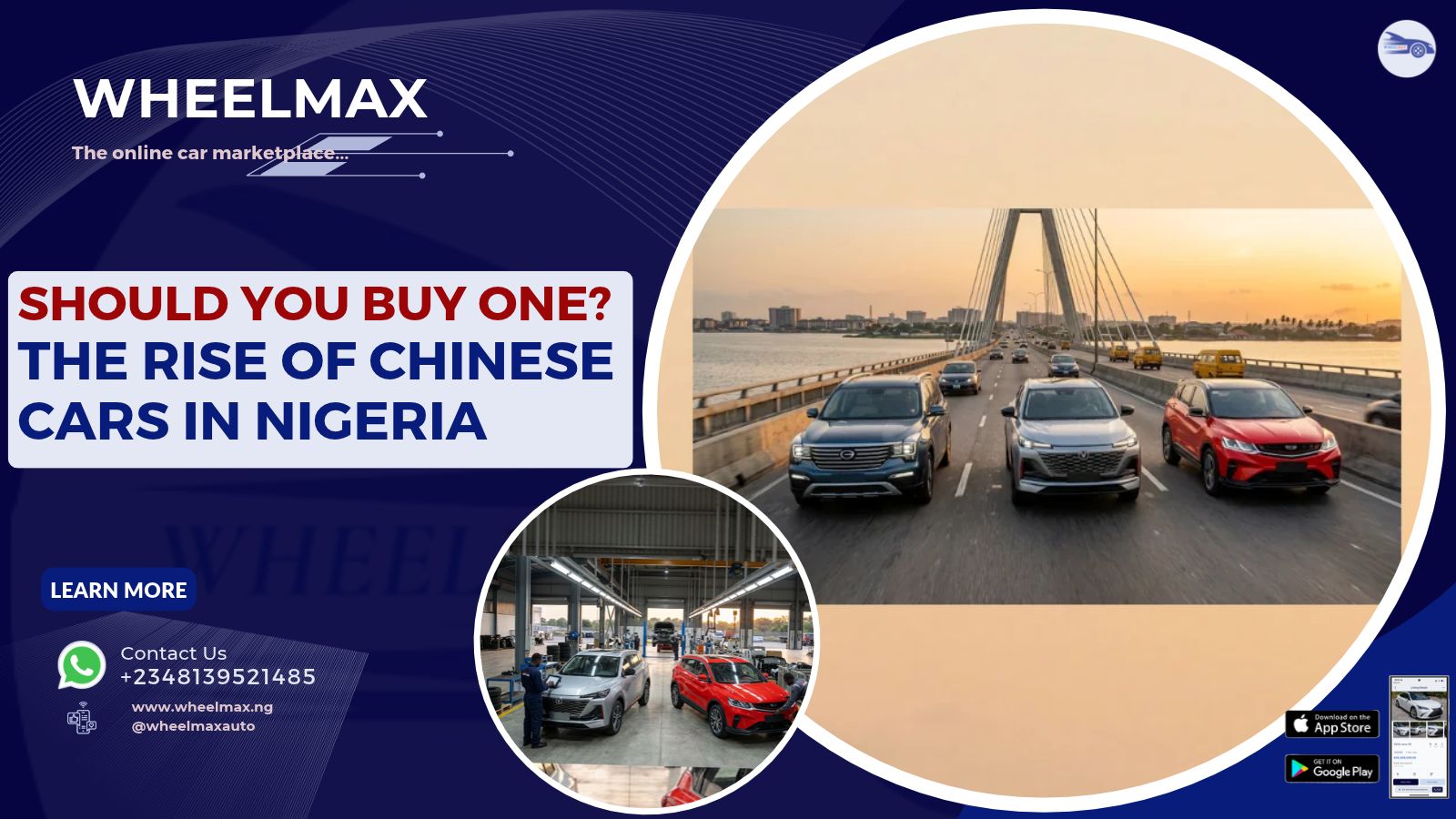
Look across the traffic on the Lekki–Ikoyi Link Bridge in Lagos, along the expressways of Abuja, or through the commercial avenues of Port Harcourt, and you will notice a striking shift in the automotive landscape.
A decade ago, Nigerian roads were a near-total duopoly of Japanese stalwarts (Toyota and Honda) alongside a smattering of German luxury badges. Today, that hierarchy is facing its most serious challenge in thirty years.
Sleek, sharply styled SUVs and crossovers wearing badges like GAC, Changan, Geely, Chery, and Haval are no longer rare sights—they are everywhere. From corporate executive fleets and bank executive parking lots to the government-backed LAGRIDE initiative, Chinese automakers have moved firmly into the Nigerian mainstream.
Yet, among everyday car buyers, the debate remains fiercely polarized.
One camp dismisses them outright, recalling early 2000s stereotypes of fragile, disposable electronics. The other camp views them as the ultimate modern life-hack: brand-new vehicles boasting luxury-level technology and factory warranties at price points that rival aging, high-mileage foreign-used (tokunbo) alternatives.
So, what is the truth? Should you spend your hard-earned money on a brand-new Chinese car, or are you better off sticking to a traditional pre-owned Japanese vehicle?
In this definitive Wheelmax Knowledge Guide, we deliver a balanced, engineering-grounded, and data-driven analysis of the Chinese automotive boom in Nigeria: examining the economic catalysts, the undeniable advantages, the real-world operational challenges, and a clear framework to determine if one belongs in your driveway.
The Economic Catalyst: How "Tokunbo" Math Changed the Game
To understand why Chinese cars are rising so rapidly in Nigeria, you have to look at the macroeconomic reality of car buying.
For decades, the default choice for the middle-class Nigerian was a clean, 5- to 7-year-old tokunbo vehicle imported from the United States or Canada. However, currency devaluation, increased port tariffs, and soaring ocean freight costs have upended that equation:
1. A 6-year-old foreign-used Toyota RAV4 or Highlander now commands between N30 million and N50 million.
2. At that price point, you are buying a vehicle that already has over 100,000 kilometers of unknown mechanical history, an expired overseas warranty, worn rubber bushings, and the risk of concealed hurricane flood or structural collision damage.
In response, major Nigerian industrial conglomerates stepped in:
1. CIG Motors partnered with GAC Motor (including establishing local assembly operations and government fleet contracts).
2. Stallion Group expanded local assembly for Changan.
3. Mikano Motors invested heavily in manufacturing facilities for Geely and Changan/Maxus.
4. Carloha established a strong assembly and retail footprint for Chery.
By assembling vehicles locally via Semi-Knocked-Down (SKD) and Completely-Knocked-Down (CKD) kits, these distributors benefit from lower import tariffs. This enables them to offer brand-new vehicles with zero kilometers, modern European-inspired styling, and comprehensive 5-year/150,000 km manufacturer warranties at prices directly competitive with five-year-old used Japanese cars.
For corporate fleet managers and value-conscious private buyers, this value proposition has become impossible to ignore.
The Pros: Why Modern Chinese Cars Are Winning Buyers
Modern Chinese automobiles are not rebadged economy knock-offs. Brands like Geely (which owns Volvo, Polestar, and Lotus) and Changan (which operates global design and R&D centers in Italy, Germany, and the UK) have hired elite European designers and partnered with world-class Tier-1 automotive suppliers (such as Bosch, Continental, BorgWarner, and Aisin).
Here is where modern Chinese vehicles genuinely excel on Nigerian roads:
1. Unmatched Technology per Naira
Step into a Changan CS55 Plus, a GAC GS8, or a Geely Coolray, and the digital experience outclasses mainstream Japanese rivals costing twice as much:
1. High-Definition 360-Degree Surround Cameras: Many models feature virtual "transparent chassis" views that let you see curbs, rocks, and open gutters directly beneath the car.
2. Integrated Dashcams: Many Chinese CUVs come standard with built-in 360-degree digital video recorders that record driving footage directly to internal memory—invaluable for resolving road disputes.
3. Standard Active Safety (ADAS): Features like Autonomous Emergency Braking (AEB), Blind Spot Monitoring, and Adaptive Cruise Control are often included as standard equipment on entry- and mid-tier trims.
2. The Brand-New Warranty Security
Buying a pre-owned car in Nigeria always carries financial anxiety: Will the transmission fail next month? Is the engine burning oil?
A brand-new Chinese vehicle removes this psychological burden. Backed by 5-year to 6-year warranties (or up to 150,000 km) and complimentary introductory service packages, your major mechanical risk is covered by corporate authorized distributors during early ownership.
3. Modern, Downsized Turbocharged Powertrains
Most modern Chinese crossovers use 1.5-liter or 2.0-liter turbocharged four-cylinder engines developed in partnership with European engineering consultancies (such as AVL or Ricardo):
1. These powertrains deliver punchy low-end torque (often between 250 Nm and 390 Nm from as low as 1,500 RPM), making highway overtakes energetic and confident.
2. On open expressways, these efficient, small-displacement engines deliver impressive fuel efficiency, averaging 6.5 to 8.0 Liters per 100 km when driven conservatively.
4. Cutting-Edge Aesthetic Appeal
Chinese automakers have embraced bold, futuristic design languages. Frameless parametric front grilles, full-width LED lightbars, flush pop-out electronic door handles, and fighter-jet cockpit layouts make these cars look distinctly premium and modern on the road.
The Cons: The Real-World Nigerian Trade-Offs
While the initial ownership experience of a brand-new Chinese car is often exceptional, owning an automobile in Nigeria is a long-distance endurance run. There are several persistent friction points every buyer must acknowledge:
1. The Resale Liquidity Gap (Depreciation)
The Reality: In Nigeria, a Toyota or Lexus functions almost like a liquid currency asset. If you need urgent cash, you can park a clean Toyota Corolla or Camry along a major road or post it online and find a verified buyer within 48 to 72 hours with minimal financial loss.
The Chinese Car Reality: The secondary market for used Chinese cars in Nigeria is still developing. If you decide to sell your vehicle after two or three years, your pool of prospective buyers is significantly smaller, and you will face steeper initial depreciation compared to Japanese counterparts.
2. The Spare Parts Supply Chain ("The Ladipo Problem")
The Reality: If a suspension drop link or brake caliper snaps on a Toyota Camry in Akure, Kaduna, or Enugu, you can find a replacement on a roadside shelf within thirty minutes.
The Chinese Car Reality: While authorized dealers (CIG, Stallion, Mikano, Carloha) stock fast-moving service items (oil filters, spark plugs, brake pads), the open spare parts markets (Ladipo, Trade Fair, Apo) do not yet hold deep inventories of body panels, specialized suspension arms, or electronic control modules.
The Risk: If you suffer a front-end bumper or headlight collision in an accident, your car may sit parked in a workshop for three to eight weeks waiting for replacement body parts to be imported from China.
3. Direct-Injection Fuel Sensitivity
The Reality: Modern Chinese turbo engines rely on high-pressure Gasoline Direct Injection (GDI). In these engines, fuel is sprayed directly into the combustion chamber at pressures exceeding 200 bar.
The Nigerian Problem: Inconsistent fuel quality, water contamination, or dirty underground storage tanks at substandard filling stations can foul sensitive direct-injection nozzles, trigger spark knock (pre-ignition), and lead to carbon buildup on intake valves. Owners must be disciplined about purchasing fuel exclusively from reputable, high-volume retail stations.
4. European-Firm Suspension Tuning on Rough Roads
The Reality: Many Chinese crossovers are engineered with firm suspension damping and low-profile tires mounted on large 18-, 19-, or 20-inch alloy wheels to deliver sharp, sporty handling on smooth Asian and European tarmac.
The Impact: On badly potholed Nigerian roads or unpaved residential streets, this firmness translates into a rigid, jarring ride. Repeated pothole impacts can cause tire sidewall bulges and accelerate wear on rubber control arm bushings.
5. Roadside Mechanic Competence
The Reality: The informal mechanic sector in Nigeria remains largely unfamiliar with the diagnostic software, dual-clutch transmission (DCT) calibration procedures, and complex electronic architectures of modern Chinese cars. Handing your vehicle over to an untrained roadside technician who attempts to diagnose problems by "feel" or bypass electrical wiring will quickly lead to electronic gremlins.
The Major Players in Nigeria: A Quick Overview
If you are exploring the market, here is where the primary Chinese brands stand in Nigeria today:
GAC Motor (Distributed by CIG Motors)
Market Standing: The most established and widely recognized Chinese passenger brand in Nigeria. Bolstered by extensive corporate partnerships, municipal assembly in Lagos, and the LAGRIDE urban transit scheme.
Standout Models: GS3 Emzoom (compact sporty crossover), GS4 (practical family crossover), and GS8 (flagship, luxury 7-seater SUV).
Strongest Advantage: Widest spare parts availability and strongest technician familiarity among Chinese brands nationwide.
Changan (Distributed by Stallion Group)
Market Standing: A global manufacturing titan with locally assembled models that rival top Japanese crossovers in styling and performance.
Standout Models: CS35 Plus (urban crossover), CS55 Plus (tech-forward family CUV), and the striking UNI-K / UNI-T crossover line.
Strongest Advantage: Highly durable "Blue Core" engine architecture and smooth, wet dual-clutch transmissions.
Geely (Distributed by Mikano Motors)
Market Standing: Benefiting heavily from Geely’s ownership of Volvo, these models feature high structural safety ratings, elegant minimalist interiors, and refined driving dynamics.
Standout Models: Coolray (dynamic, high-performance compact SUV) and Emgrand (executive compact saloon).
Strongest Advantage: Exceptional interior material quality, European chassis feel, and comprehensive local warranty backing.
Chery (Distributed by Carloha Nigeria)
Market Standing: Rapidly expanding its retail and aftersales infrastructure across Lagos and Abuja with aggressive pricing and long-term warranty incentives.
Standout Models: Tiggo 4 Pro, Tiggo 7 Pro, and Tiggo 8 Pro (three-row executive family hauler).
Strongest Advantage: Generous interior equipment levels and attractive price-to-size ratios for growing families.
The Decision Matrix: Should You Buy One?
To cut through the emotional arguments, use this practical decision framework to determine whether a brand-new Chinese car fits your lifestyle:
You SHOULD Buy a Chinese Car If:
You want zero-mileage reliability: You are exhausted by the uncertainty of foreign-used cars and want a factory-fresh vehicle with no prior wear and tear.
You plan to keep the car for 4 to 6 years: If your intention is to drive the vehicle through its factory warranty window, early resale depreciation becomes irrelevant compared to the thousands of dollars saved on maintenance and repairs.
You are a corporate fleet manager or professional: You have a fixed vehicle allowance, drive primarily within paved metropolitan areas (Lagos, Abuja, Port Harcourt), and value the security of structured dealer servicing.
You love modern cabin technology: You prioritize seamless digital integration, high-definition 360-degree cameras, wireless smartphone connectivity, and modern active safety aids.
You Should STICK TO a Used Japanese Car If:
You live or commute primarily in rural/remote areas: If you reside far away from authorized service hubs and rely on local roadside parts stalls for your maintenance needs.
You change cars every 12 to 24 months: If you view your car as a liquid short-term financial store of value, the liquidity and slow depreciation of a Toyota or Lexus remain unmatched.
You frequently drive rough, unpaved off-road terrain: If your daily commute involves severe, unpaved washboard tracks and rocky rural roads, a traditional body-on-frame SUV with high-profile tires and simple mechanicals will endure the abuse with less fragility.
The Wheelmax Ownership Rule for Chinese Cars
If you choose to purchase a modern Chinese vehicle, follow these three ground rules to guarantee long-term reliability:
Protect Your Warranty: Never service your car at unverified roadside shops during your warranty window. Always adhere strictly to the scheduled service intervals at certified service centers using factory-approved diagnostic tools.
Insist on High-Grade Fluids: These downsized turbocharged engines demand low-viscosity, high-performance 0W-20 or 5W-30 Full Synthetic Oil meeting API SP/ILSAC GF-6 standards. Never allow anyone to pour heavy mineral oils (SAE 40/50) into your engine.
Be Selective About Fuel: Fill your tank exclusively at reputable, high-volume retail stations to protect your direct-injection fuel system, and use a dedicated fuel system cleaner periodically to prevent valve carbon accumulation.
The Final Verdict
The automotive industry has seen this script before.
In the 1970s, the Western world laughed at Japanese cars before Toyota and Honda came to dominate global roads. In the late 1990s and early 2000s, critics dismissed South Korean brands before Hyundai and Kia established themselves as global automotive giants.
Today, Chinese automakers are executing the exact same playbook—at three times the speed.
Chinese cars in Nigeria are no longer an experimental gamble; they are a legitimate, highly competitive alternative to an increasingly expensive and unpredictable pre-owned car market. While buyers must remain realistic about long-term parts logistics outside major cities and secondary resale liquidity, the sheer value, modern safety, cabin luxury, and warranty-backed peace of mind they offer make them a formidable contender.
For the modern Nigerian driver ready to trade yesterday's badge prestige for tomorrow's technology and zero-mileage security, the answer is clear: as long as you purchase from an established distributor with verified local aftersales backing, buying a modern Chinese car is one of the smartest automotive moves you can make today.
Purchasing a new or late-model vehicle? From comprehensive Pre-Delivery Inspections (PDI) to computerized diagnostics and factory-grade maintenance, keep your vehicle performing at its absolute peak with the certified automotive specialists at Wheelmax.