

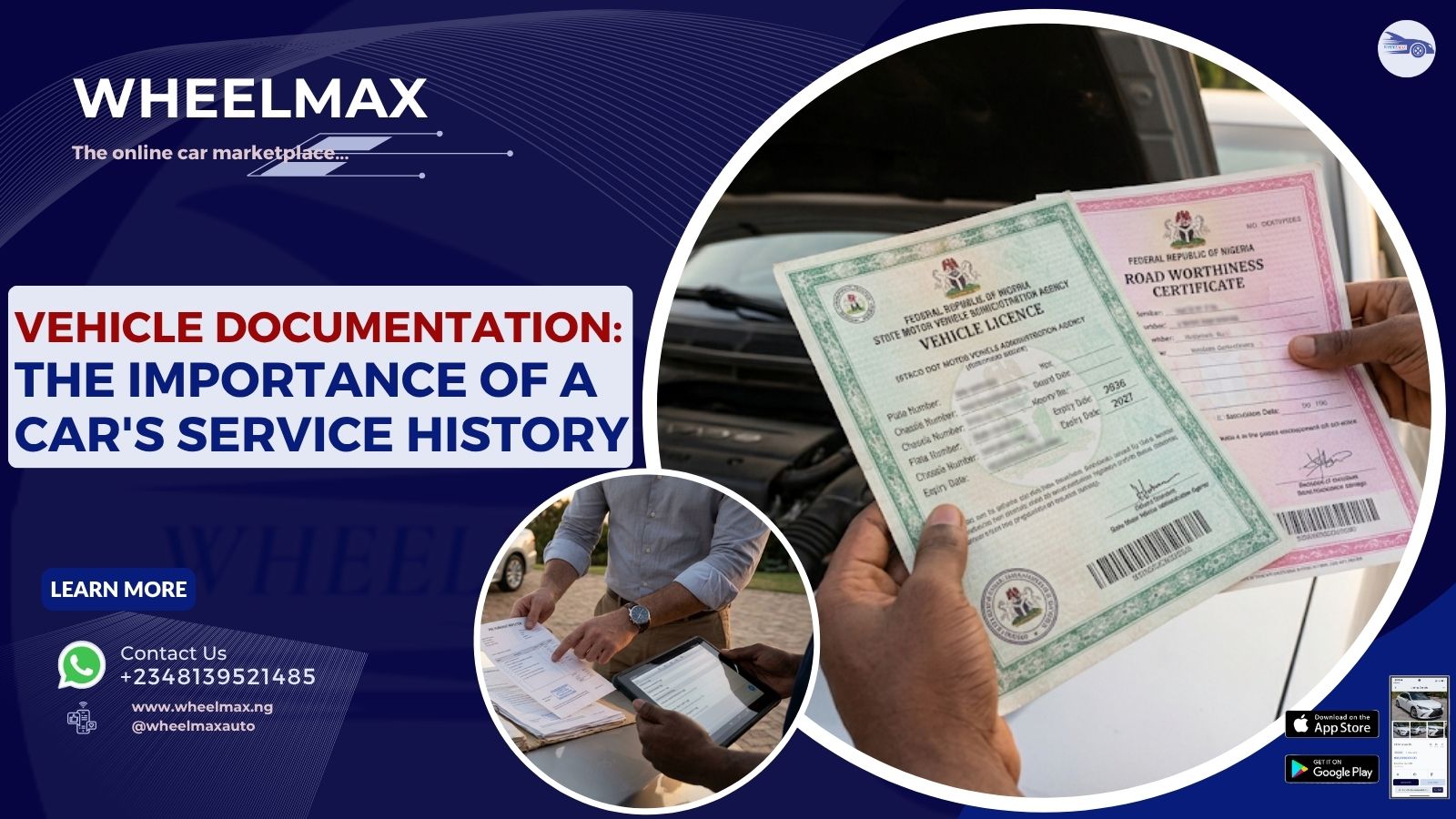
Open any popular Nigerian car marketplace, classified group, or social media sales page, and you will see the exact same sales pitch repeated verbatim:
"Buy and drive! First body, ice-chilling A/C, sharp engine, nothing to fix!"
In the Nigerian automotive space, "buy and drive" has become the default slogan used to describe almost every foreign-used (tokunbo) or locally used vehicle. Yet, thousands of Nigerian car buyers discover within their first month of ownership that their "buy and drive" bargain actually requires a new automatic transmission, a complete suspension overhaul, or a replacement engine block.
Why does this happen so frequently? Because the Nigerian used car market has historically operated on an information vacuum.
When you buy a car based solely on washed exterior paint and a clean dashboard, you are effectively taking a blind gamble. You cannot see whether the previous owner poured thick commercial generator oil into the engine, used rusty borehole water in the radiator, or disconnected the Check Engine Light bulb to conceal a failed catalytic converter.
This is where a documented service history changes everything.
In this edition of Wheelmax Spec-Explained, we break down why a verifiable service history is the ultimate currency of trust for car buyers, and how it serves as a powerful financial asset that puts more money into the pockets of car sellers.
Part 1: Why Service History is Non-Negotiable for Buyers
For a prospective buyer, looking at a car without its service records is like hiring a senior executive without checking their resume. A documented maintenance history transforms a stressful guessing game into an evidence-based financial decision.
Here is what a complete service history reveals that a shiny paint job cannot:
Unmasking Digital Odometer Fraud
Odometer tampering is rampant in the Nigerian pre-owned market. Unscrupulous car dealers frequently pay technicians with handheld digital programmers to roll back odometers—turning a high-mileage, worn-out 220,000 km commuter vehicle into an appealing "low-mileage" 85,000 km vehicle.
1. How Service History Protects You: A chronological logbook or collection of dated workshop invoices creates an unbroken paper trail. If a service invoice shows an oil change performed at 140,000 km in 2024, but the car's instrument cluster currently displays 95,000 km in 2026, you have caught the fraud instantly before parting with millions of Naira.
Verifying Fluid Quality & Mechanic Competence
Modern vehicles are intolerant of improper lubricants. Variable Valve Timing (VVT) systems and hydraulic timing chain tensioners require exact multigrade synthetic oils (such as 0W-20 or 5W-30).
1. The Danger: If a vehicle was routinely taken to an untrained roadside mechanic who used thick monograde mineral oil (SAE 40 or SAE 50), the engine has suffered accelerated internal wear on cold morning starts.
2. How Service History Protects You: A detailed receipt specifies the exact oil viscosity, brand, and API rating used, proving whether the previous owner cared for the engine correctly or cut corners with cheap commercial oil.
Tracking Critical "Ticking Time-Bomb" Consumables
Certain automotive components do not show visible signs of wear until the moment they fail catastrophically:
1. Timing Belts: In vehicles with interference engines (such as the Honda Pilot or older Toyota V6s), a rubber timing belt must be replaced every 100,000 kilometers. If it snaps, the valves smash into the pistons, destroying the engine.
2. Automatic Transmission Fluid (ATF): Gearboxes require scheduled fluid flushes every 40,000 kilometers.
3. How Service History Protects You: Seeing an invoice for a timing belt, tensioner, and water pump replacement completed 15,000 km ago tells you that you are safe from an unexpected million-Naira engine replacement.
Predicting Real Ownership Costs
A car with a complete service history allows you to budget accurately. If records show the front shock absorbers, brake pads, and battery were replaced within the last six months, you know you will not need to spend money on those wear-and-tear items in your first year of ownership.
Part 2: Why Service History is Pure Gold for Sellers
If you currently own a car in Nigeria and plan to upgrade or sell it in the future, maintaining a documented service history is the single most effective way to maximize your financial return.
Many sellers mistakenly believe that spending N50,000 on high-end exterior detailing or repainting a bumper adds the most value. In reality, modern, informed buyers care far more about mechanical provenance than cosmetic touch-ups.
Here is why documented maintenance directly increases your car's market value:
It Unlocks the "Provenance Premium"
Two identical 2014 Toyota Camrys can sit side by side in Lagos:
Car A has no records; the owner simply claims, "I maintained it very well, believe me."
Car B comes with a dedicated folder containing every stamped service receipt, itemized invoices showing 5W-30 full synthetic oil changes every 6,000 km, and receipts for genuine OEM brake pads and coolant flushes.
Car B will easily command a 15% to 25% price premium over Car A. Serious buyers are more than willing to pay extra for verified peace of mind because they know they are not inheriting hidden mechanical liabilities.
It Disarms Aggressive Lowball Offers
The standard negotiation tactic for used car buyers in Nigeria is to assume the worst. A buyer will inspect your vehicle and say: "The car looks okay, but I don't know the state of the gearbox or the timing chain. I will need to spend N500,000 immediately to service everything, so I am reducing my offer."
The Counter-Strategy: When you hand the buyer a folder containing dated service receipts showing the transmission fluid was changed 8,000 km ago with OEM fluid, their negotiation leverage collapses. Documentation eliminates doubt and protects your asking price.
It Dramatically Speeds Up Your Sale
Selling a car privately in Nigeria can often take months of entertaining tire-kickers, timewasters, and suspicious buyers. A documented service history builds immediate trust. When prospective buyers see proof of meticulous care, transactions close faster, often within days of listing.
What Does a Credible Service History Actually Look Like?
A valid service history does not have to be an expensive leather-bound book from an authorized franchise dealership. In the Nigerian context, credibility comes from verifiable detail.
A high-quality service record contains four key components:
1. Chronological Date and Odometer Logging
Every record must clearly state the date of the service and the exact odometer reading at the time of the visit. This establishes a logical, ascending timeline of vehicle usage.
2. Itemized Invoices (Parts vs. Labor)
Vague handwritten receipts that state "Serviced car - N85,000" offer little value. A credible invoice clearly separates parts from labor and details the exact specifications:
- Example: "5 Liters Mobil 1 5W-30 Full Synthetic Oil"
- Example: "1 Genuine Toyota OEM Oil Filter (Part #04152-YZZA1)"
- Example: "Radiator Flush using 2 Gallons Prestone 50/50 Prediluted Coolant"
3. Clear Workshop Identification
Receipts should carry the name, phone number, physical address, or digital stamp of the auto workshop or service center. This allows a prospective buyer to independently call or visit the garage to confirm the work was genuine.
4. Digital Records and Diagnostic Scans
In today's digital era, printouts or saved PDF reports from computerized OBD-II scans (showing zero pending Diagnostic Trouble Codes) add an extra layer of transparency that sophisticated buyers love.
4 Red Flags: How to Spot a Fake Service History
As buyers become more demanding, some dishonest sellers attempt to manufacture fake maintenance records. When inspecting a vehicle's documentation, watch out for these four red flags:
1. The "Single-Pen" Miracle
If a seller presents a maintenance logbook where entries supposedly spanning four or five years (2021 to 2026) are written in the exact same colored ink, with identical handwriting, and showing identical paper aging, the logbook was filled out at a dining table the night before your inspection.
2. Odometer Timeline Inconsistencies
Compare the service dates against the mileage recorded on each receipt. If an invoice from January 2025 records the mileage at 110,000 km, but an invoice from August 2025 shows 102,000 km, the records are either fabricated or the vehicle’s odometer has been manipulated.
3. Generic "Lump-Sum" Receipts
Be skeptical of workshops that provide receipts without parts itemization. A receipt that simply lists "Engine work: N350,000" often conceals low-grade repairs, substandard used parts, or amateur patchwork.
4. The "My Mechanic Has the Receipts" Excuse
If a seller claims the car has a full service history, but insists that "all the receipts are with my mechanic in his workshop across town," assume no verifiable history exists. Serious owners keep their own automotive financial records.
How to Start Documenting Your Car's History Today
If you currently own a vehicle and have not been keeping records, it is never too late to start. You can immediately begin building your vehicle’s provenance by following three simple habits:
1. Dedicate a Physical File in Your Glovebox: Keep a clean plastic folder in your glovebox or home office. Every time you purchase engine oil, replace brake pads, buy a new tire, or pay for wheel alignment, immediately slip the physical receipt into the file.
2. Photograph Every Service Milestone: Whenever your car is serviced, snap a quick photo on your smartphone of the odometer, the new parts boxes (showing part numbers), and the invoice. Save these in a dedicated cloud photo album labeled with your car's registration number.
3. Log Digital Maintenance with Modern Platforms: Move beyond paper. Utilizing digital automotive platforms like Wheelmax allows you to digitally log every routine service, diagnostic health scan, and parts replacement, creating an immutable, shareable digital maintenance ledger that travels with your vehicle.
Conclusion: Transparency is the Future of Nigerian Motoring
The days of relying on empty "buy and drive" promises are coming to an end. As automotive replacement costs and vehicle prices remain significant investments in Nigeria, buyers are demanding accountability, and smart sellers are capitalizing on transparency.
A documented service history is more than just paper—it is proof of respect. It proves that a seller respected their machine, and it gives a buyer the confidence to invest their hard-earned money without fear.
Whether you are buying your next crossover or planning to sell your daily commuter, remember: a car’s maintenance history is just as valuable as the metal itself.
Looking to buy a pre-owned vehicle with total confidence, or want to start building a verified digital maintenance record for your car? Discover how Wheelmax is bringing complete transparency, certified diagnostics, and verified maintenance tracking to Nigerian car owners today.