

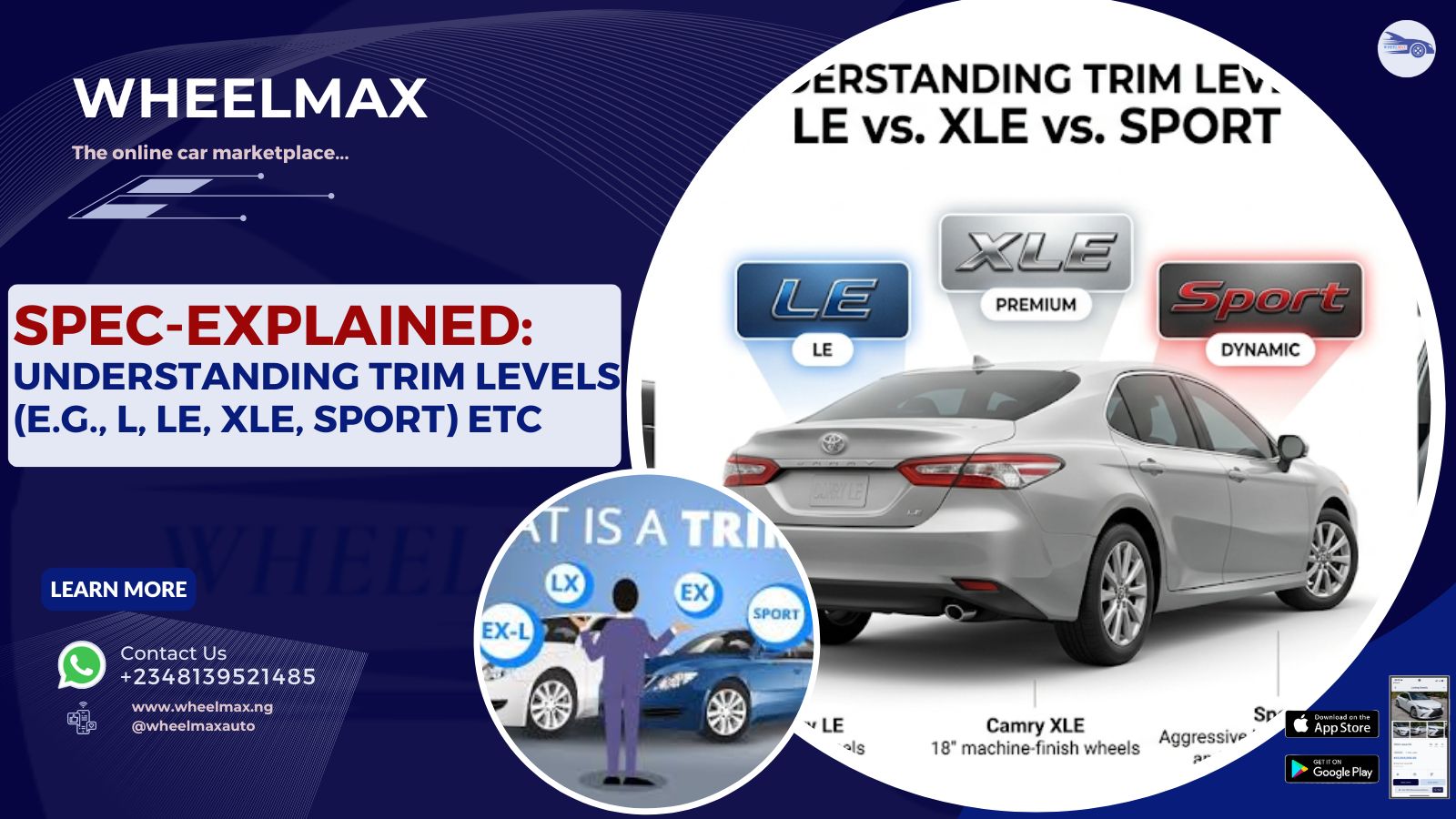
Have you ever scrolled through car listings on Wheelmax and wondered why two cars of the same year and model have a price difference of ₦3 million or more? The secret usually lies in two or three letters stuck to the trunk of the car: The Trim Level.
Understanding trim levels is the key to decoding a car listing. It tells you exactly what you are paying for—from the fabric of the seats to the technology under the hood. In this guide, we break down what these alphabets mean and how they impact your pocket today and your resale value tomorrow.
What Exactly is a Trim Level?
Think of a car model (like a Toyota Camry) as a meal on a menu. The Trim Level is the set of "toppings" or upgrades you choose. While the engine and frame are often similar, the trim level determines the level of luxury, safety technology, and exterior styling.
Manufacturers use these levels to cater to different budgets. Someone looking for a basic "point A to point B" car will choose a base trim, while someone wanting a "mini-limousine" experience will go for the top-tier version.
Decoding the Alphabet Soup
While every manufacturer has its own naming convention, here is a breakdown of the most common trims you will find in the Nigerian market:
1. The Base Trim (L, S, or Standard)
- What it is: The "no-frills" version.
- Features: Usually comes with fabric seats, basic plastic hubcaps (instead of alloy rims), and a standard infotainment system.
- Pros: It is the most affordable way to own a specific model. It’s perfect for fleet use or budget-conscious buyers.
2. The Mid-Range (LE, LX, or SV)
- What it is: Often standing for "Luxury Edition" (LE) or "Luxury" (LX).
- Features: This is the "Goldilocks" trim—not too basic, not too expensive. You’ll often get alloy wheels, a power-adjustable driver’s seat, and better safety sensors.
- Market Status: In Nigeria, LE is the most popular trim because it balances price and comfort perfectly.
3. The Sport Trim (SE, Sport, or R-Line)
- What it is: Designed for those who want a more aggressive look.
- Features: You’ll notice "honeycomb" grilles, larger rims, dual exhaust pipes, and sometimes a firmer suspension for better handling. Inside, it might have paddle shifters or red stitching on the seats.
4. The Premium/Top Tier (XLE, Limited, Touring, or Platinum)
- What it is: The "Executive" version.
- Features: This is where you find leather seats, sunroofs/panoramic roofs, premium sound systems (like JBL or Bose), and 360-degree cameras.
- Price: These are significantly more expensive but offer the highest level of comfort.
How Trim Levels Impact the Deal
1. The Purchase Price
The jump from an LE to an XLE can be substantial. When viewing a listing, don't just compare years; compare trims. A 2018 LE might be cheaper than a 2017 XLE because of the luxury features the older car carries.
2. The Tech and Safety
Modern safety features like Blind Spot Monitoring, Adaptive Cruise Control, and Lane Keep Assist are often "locked" behind higher trim levels. If safety is your priority, you may need to look past the base models.
3. Resale Value (The Nigerian Factor)
In the Nigerian used car market, certain trims are "hot cakes."
- An XLE or Limited trim usually sells faster and commands a higher price because Nigerian buyers value features like leather seats and sunroofs.
- However, Sport (SE) trims are highly coveted by younger buyers for their aesthetic appeal.
- Pro Tip: If you buy a base trim (L), it might be harder to sell later because buyers often prefer the "upgraded" look of the LE or XLE.
Which One Should You Choose?
- Choose a Base/LE Trim if you are looking for a reliable daily driver, a Bolt/Uber vehicle, or if you want to maximize fuel economy (base trims are often lighter and more fuel-efficient).
- Choose a Sport Trim if you care about how the car looks and want a more "engaging" drive.
- Choose an XLE/Limited Trim if you spend a lot of time in traffic and want the maximum comfort that leather and premium sound provide.
Final Thoughts
Next time you're browsing the Wheelmax Knowledge Base or our car listings, look beyond the name of the car. Check the badge on the back. Knowing the difference between an LE and an XLE ensures you aren't overpaying for a base model—and that you're getting the exact features you need for your lifestyle.
Ready to find your perfect match? Filter our Verified Listings by trim level to see the difference for yourself.