
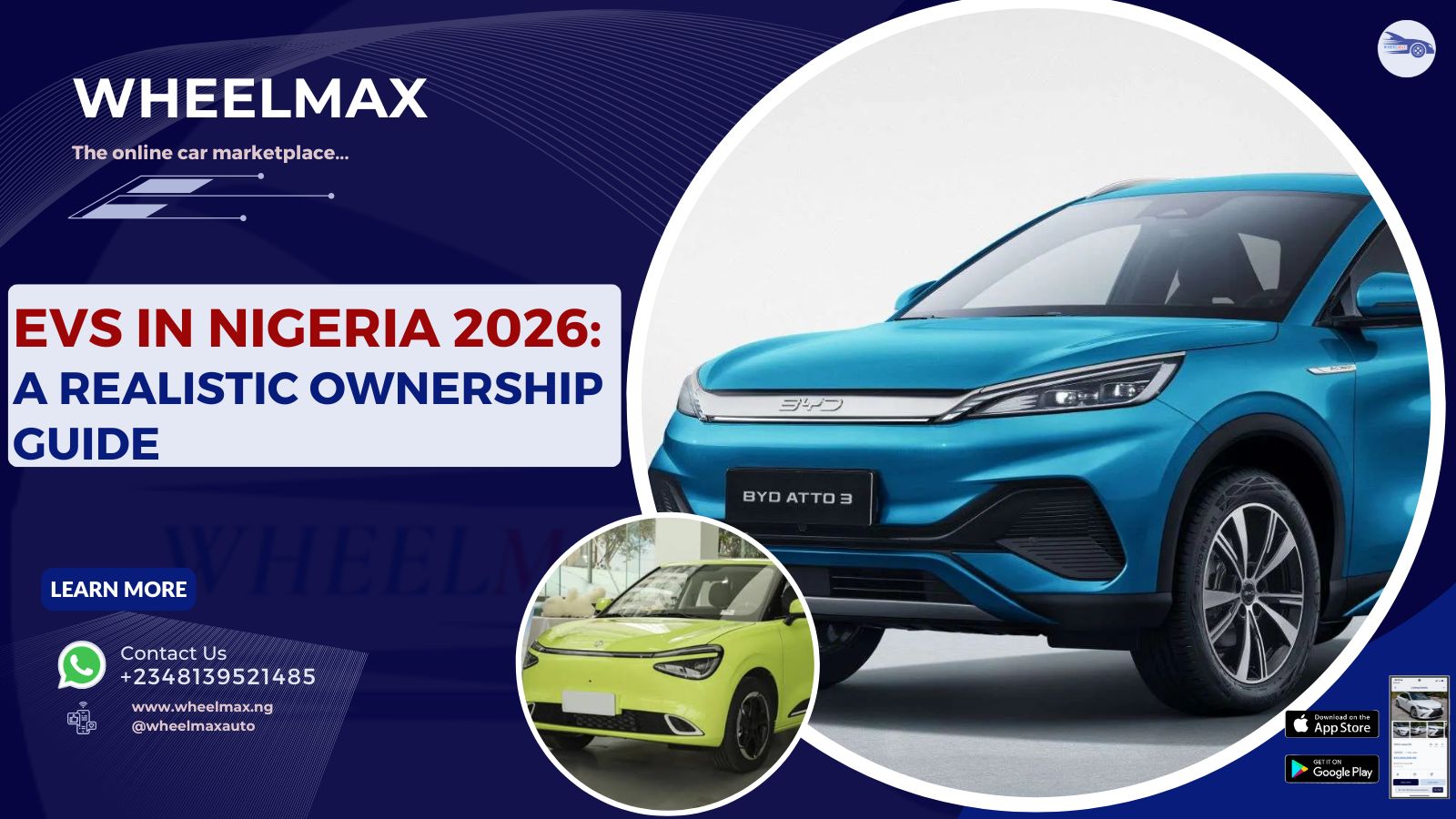
You see them gliding silently through traffic, their sleek designs and futuristic dashboards turning heads. Electric Vehicles (EVs) are no longer a distant fantasy; they are on Nigerian roads, today. Brands like BYD are making a powerful promise: an escape from the tyranny of the petrol pump, a thrilling new driving experience, and a leap into the future of mobility.
The promise is intoxicating. Imagine never having to worry about fuel scarcity or unpredictable price hikes again. Imagine your running costs plummeting by over 70%.
But behind this incredible promise looms a cloud of very real and very serious questions. Where do I charge it? What if the power goes out? How much does it really cost? What happens if something goes wrong? The fear of the unknown is the single biggest barrier holding smart buyers back from embracing this revolution.
Forget the global hype. This is your realistic, no-nonsense guide to owning an EV in Nigeria in 2026. We're going to give you the unvarnished truth about the pros and the cons, so you can make an informed, strategic decision, not an emotional one.
The Unbeatable Pro: The Astonishingly Low Running Costs
This is the number one, undisputed reason to consider an EV. The financial savings are not just marginal; they are game-changing.
Let’s do the math. Consider a typical daily commute of 50km.
- Petrol Car (e.g., Toyota Corolla at 10L/100km):
- Fuel Needed: 5 Litres
-Cost (at ~₦800/Litre): ~₦4,000 per day
- EV (e.g., BYD Atto 3):
- Electricity Needed: An EV uses about 15-20 kWh of electricity to travel 100km. For 50km, that’s about 7.5-10 kWh. Let's use 10 kWh.
- Cost (at a residential rate of ~₦70/kWh): ~₦700 per day
The Stunning Reality: You are looking at a potential reduction in your "fueling" costs of over 80%. Over a year, this can translate to savings of hundreds of thousands of naira. Furthermore, EV maintenance is drastically cheaper. There are no oil changes, no spark plugs, no fan belts, and no exhaust systems to worry about. Your primary maintenance costs are tyres and brakes.
The Critical Hurdle: The Charging Question
This is the most important part of the EV ownership equation in Nigeria. Your charging reality will determine if an EV is a brilliant move or a constant source of stress.
- The Golden Rule: You MUST Have Reliable Home or Office Charging.
>This is non-negotiable. The vast majority of your charging (99%) will happen overnight at home or during the day at your office, just like your smartphone. You need a dedicated, safe place where you can plug in your car for 6-8 hours.
>Most EVs come with a "Level 2" home charger that needs to be installed by a qualified electrician. This is a one-time setup cost you must factor in.
- Living with the Nigerian Power Grid:
>What if NEPA/PHCN takes light? This is the reality we live in. Serious EV owners in Nigeria have a secondary power source. If you already have a stable generator or a solar/inverter system that can handle a sustained load (around 7kW), you are well-prepared. An EV simply becomes another appliance in your home. If you don't, the cost of upgrading your power backup system must be considered part of the EV purchase price.
- The Public Charging Network:
>It is growing but is still in its absolute infancy. There are a few public charging stations in major hubs in Lagos and Abuja, but they are not yet widespread enough to be relied upon for daily needs or long-distance travel. Do not buy an EV with the assumption that you will primarily use public chargers.
The Ownership Experience: Performance, Maintenance & Long-Term Questions
-The Drive is a Revelation: The first time you drive an EV is a game-changing experience. The instant, silent, and powerful acceleration makes even a standard petrol car feel sluggish and noisy. It makes navigating city traffic incredibly smooth and effortless.
-Maintenance is Minimal, but Specialized: While you'll save a fortune on routine servicing, any issue with the battery, motor, or high-voltage electronics requires a specialist. You cannot take an EV to your regular mechanic. You will be dependent on the official dealer network (e.g., CIG Motors for GAC/BYD) or a handful of independent EV specialists. This network is still very small.
-Battery Life & Resale Value: Modern EV batteries are designed to last for many years (often with an 8-year warranty). However, they do degrade slowly over time. The long-term resale value of EVs in the Nigerian 'Tokunbo' market is still a major unknown. You are buying a car for its ownership benefits, not as a short-term financial investment.
The Wheelmax Verdict: Who Should Buy an EV in Nigeria in 2026?
Owning an EV in Nigeria today is not for everyone. It requires a specific lifestyle and a forward-thinking mindset.
- An EV is a brilliant choice for you if:
- You have a predictable daily commute (e.g., less than 150km per day).
- You own your home or have a dedicated, secure parking spot at home/office where you can install a charger.
- You have a stable power backup system (generator or solar/inverter) that can handle the load.
- You are excited by new technology and value a superior, silent, and powerful driving experience.
- You plan to own the car for the long term to maximize your running cost savings.
You should probably wait if:
- You live in an apartment with no dedicated charging.
- You frequently do long-distance, inter-state travel to areas with no charging infrastructure.
- You do not have a reliable power backup system.
- Your top priority is maximizing resale value in the short term.
An EV in 2026 is a strategic choice for the prepared early adopter. It offers an unparalleled ownership experience and incredible financial savings, but only if your lifestyle can accommodate its unique infrastructure needs.
Explore the latest EV and Hybrid models on Wheelmax