

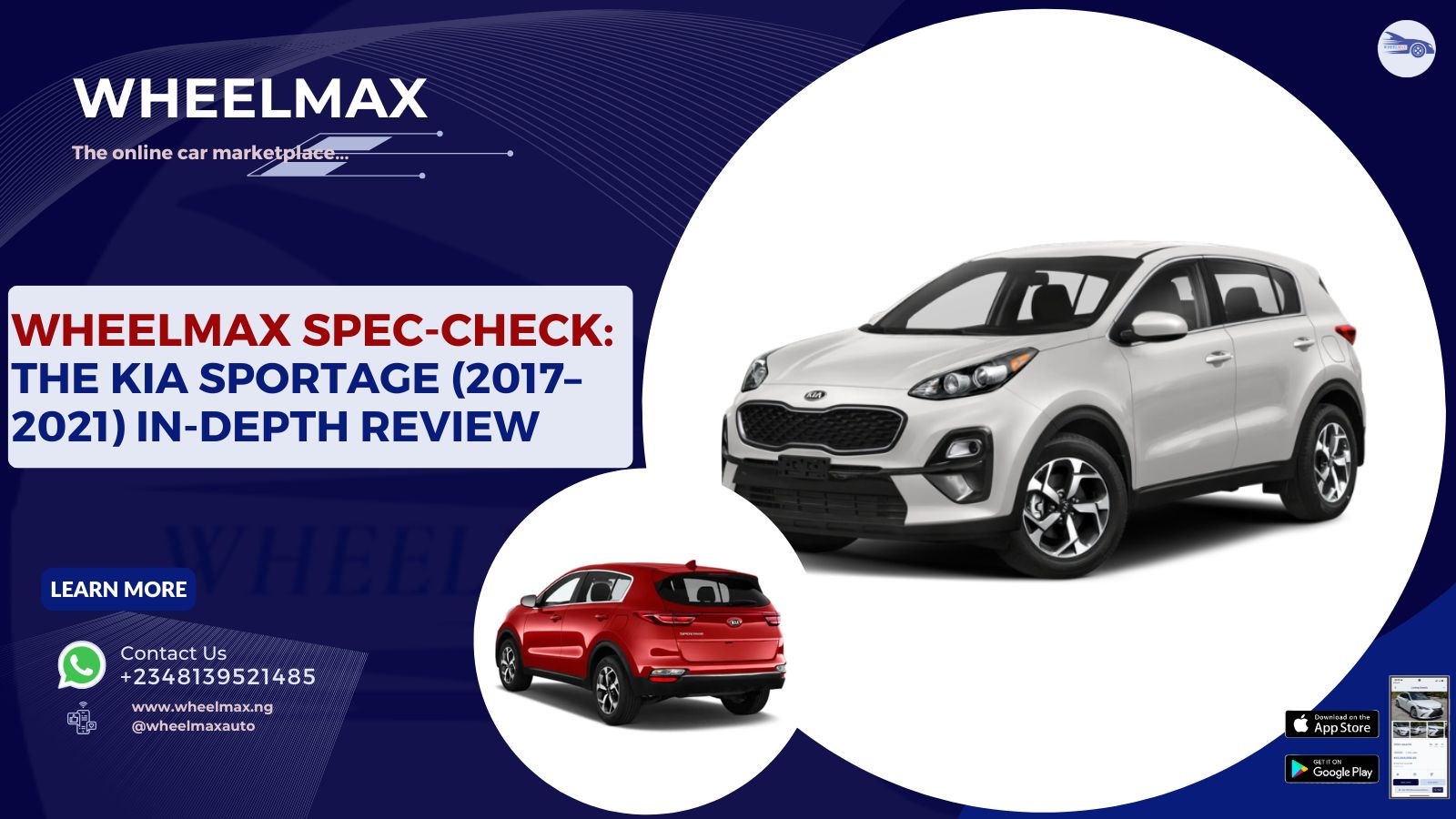
If there is one vehicle that redefined what a "mainstream" crossover could look like, it is the fourth-generation (QL) Kia Sportage. While its competitors opted for safe, conservative styling, Kia took a gamble on a bold, European-inspired design that continues to turn heads in Lagos and Abuja in 2026.
But beyond the "Porsche-inspired" headlights and the aggressive grille, is the Sportage a smart investment for the Nigerian road? In this Wheelmax Spec-Check, we dive into the design, the interior quality, and how it stacks up against its mechanical twin, the Hyundai Tucson.
1. The Design: Standing Out in the "Go-Slow"
The 2017–2021 Sportage is immediately recognizable. Designed under the direction of Peter Schreyer, it moved away from the "mini-SUV" look to a more athletic, "high-riding hatchback" silhouette.
1. The Face: The high-mounted headlights and the signature "Tiger Nose" grille give it a mischievous, energetic look.
2. The GT-Line: If you are browsing Wheelmax for the best version, look for the GT-Line. It adds "ice cube" LED fog lights and dual exhaust tips, giving the car a premium, sporty edge that few other crossovers in this price bracket can match.
3. Visibility: The Sportage offers excellent ground clearance for Nigerian speed bumps, but the thick rear pillars mean you’ll heavily rely on the reverse camera when navigating tight parking spots.
2. Interior Quality: A Driver-Centric Sanctuary
Kia has significantly closed the "quality gap" with Japanese rivals. The Sportage cabin feels robust and premium, built to withstand the heat and dust of the Nigerian climate.
1. Ergonomics: The dashboard is tilted 7.2 degrees toward the driver. This makes accessing the 7 or 8-inch touchscreen intuitive, ensuring your eyes stay on the road.
2. Materials: You’ll find a generous use of soft-touch materials on the dashboard and armrests. Even the base "LX" trims feel well-assembled, avoiding the "hollow plastic" feel found in some older crossovers.
3. Space: While it is a compact SUV, the rear legroom is surprisingly generous, comfortably sitting three adults for a trip from Lagos to Ibadan.
3. The "Cousin" Rivalry: Sportage vs. Tucson
It is the most common question in the Nigerian crossover market: "Should I buy a Sportage or a Tucson?" Under the skin, they share the same chassis and engines, but they are tuned for different personalities.
The Verdict: Choose the Sportage if you want a car that feels "alive" and stands out. Choose the Tucson if you prefer a "cloud-like" ride and a more traditional SUV look.
4. Performance & Reliability: The Nigerian Reality
Most Sportage units in the Nigerian used market feature the 2.0L or 2.4L Naturally Aspirated engines.
1. Reliability: These engines are the "workhorses" of the Kia/Hyundai world. They handle the heat well and are relatively simple for local mechanics to service.
2. The Maintenance Protocol: In 2026, we cannot emphasize this enough: Use Full Synthetic 5W-20 or 5W-30 oil. The variable valve timing in these engines is sensitive to "thick" mineral oil.
3. Fuel Consumption: The 2.0L engine is remarkably frugal, making it a great choice for the daily commute. However, if you do a lot of highway driving with a full load, the 2.4L offers the extra "grunt" needed for overtakes.
5. Resale Value: The "Lagos Rising Star"
While Toyota still holds the crown for resale value, the Kia Sportage is a close second in the crossover segment. Because it is highly aspirational and stylish, a well-maintained Sportage remains a liquid asset in the Nigerian market, often selling faster than European luxury SUVs.
The Wheelmax Bottom Line
The Kia Sportage (2017–2021) is for the buyer who refuses to be "standard." It offers a high-quality interior and a bold design backed by a mechanical platform that has proven its toughness on Nigerian roads.
Ready to find your Sportage? Browse our Verified Kia Sportage Collection on Wheelmax. Every unit undergoes our diagnostic Spec-Check to ensure the engine, transmission, and electronics are ready for the long haul.