

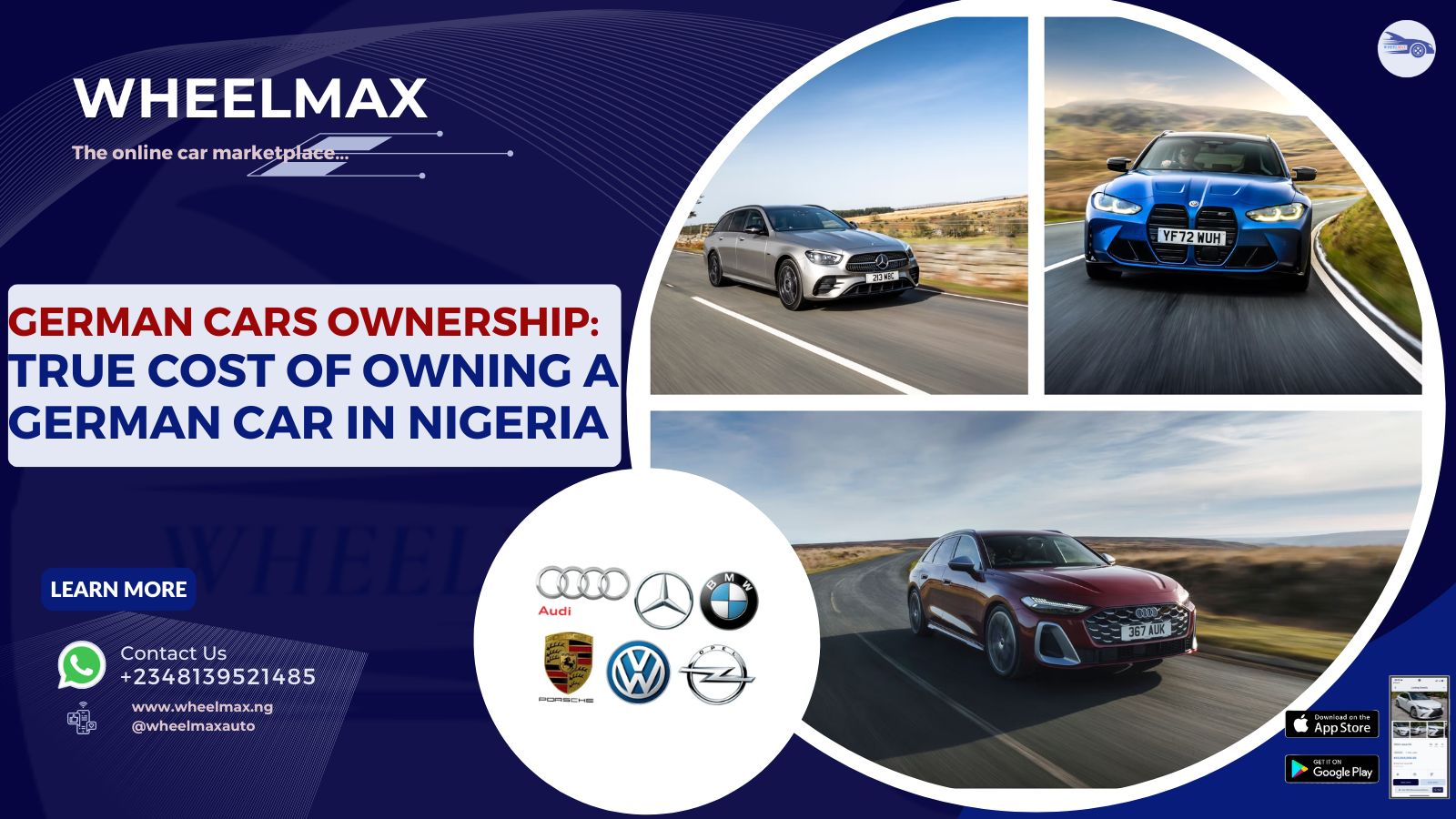
In the Nigerian automotive landscape, few things command as much respect as a silver "Three-Pointed Star" or a blue-and-white "Bavarian" badge. Owning a Mercedes-Benz or a BMW is a cultural milestone; it’s a statement of success, engineering appreciation, and prestige.
However, at Wheelmax, we believe that transparency is the foundation of a good deal. While German cars offer a driving experience that Japanese counterparts often can't match, they come with a "subscription fee" that many first-time buyers aren't prepared for.
If you are transitioning from a Toyota or Lexus to a German brand in 2026, here is an honest breakdown of what it really costs to keep that "German Machine" on the road.
1. The Engineering Philosophy: Precision vs. Practicality
To understand the cost, you must understand the "why."
- Japanese Strategy: Cars like Toyota and Honda are engineered for durability and tolerance. They are designed to survive missed oil changes, low-quality fuel, and rough handling.
- German Strategy: Brands like Mercedes, BMW, and Audi are engineered for precision and performance. They are built to perform at 200km/h on the Autobahn. This requires tighter tolerances, complex sensors, and sophisticated materials.
The Result: When a Japanese car has a minor fault, it keeps moving. When a German car has a minor fault, its computer often puts the car into "Limp Mode" to protect the precision-engineered engine, forcing an immediate (and often expensive) repair.
2. The Specialist Labor Gap
In Nigeria, you can find a mechanic for a Toyota Camry in almost every local government area. The same is not true for a modern BMW or Mercedes.
- Diagnostics over Spanners: Modern German cars are essentially computers on wheels. You cannot "guess" a fault with a Mercedes. You need specialized diagnostic tools (like the Mercedes STAR system or BMW’s ISTA).
- The Labor Premium: Because these cars require specialized training and expensive software, "German Specialists" charge significantly higher labor rates than general mechanics. In 2026, a simple diagnostic scan for a German car can cost as much as a full service for a Toyota Corolla.
3. The Parts Price Multiplier
German parts are generally more expensive for two reasons: they are often made of high-grade materials (like aluminum instead of steel), and they frequently include integrated electronics.
- Example: Suspension. Many German cars use aluminum control arms to reduce weight and improve handling. In the event of a hit on a Nigerian pothole, these parts are more likely to bend or snap than the heavier steel parts of a Lexus, and they cost 2x to 3x more to replace.
- Consumables: A German car typically requires Full Synthetic Oil (8 to 9 liters for some V6/V8 engines) and high-performance brake pads that wear out faster but stop better.
4. The "Nigerian Factor": Heat and Fuel
German cars are designed for temperate European climates. Our local environment presents two unique challenges:
- The Cooling System: High ambient temperatures in Nigeria (35°C+) put immense pressure on cooling systems. German cars use a lot of plastic in their cooling loops (expansion tanks, flanges), which becomes brittle and cracks under our heat. Expect to refresh your cooling system every 3–4 years.
- Fuel Sensitivity: Most modern German cars use Direct Injection and Turbochargers. These systems are highly sensitive to the octane levels and cleanliness of Nigerian fuel. Using "dirty" or low-octane fuel can lead to carbon buildup and failed fuel injectors—a repair that can easily run into millions of Naira.
German vs. Japanese: The Cost Comparison (At a Glance)
Should You Still Buy One?
Yes—but only if you "Pay to Play."
German cars are rewarding to drive, safer, and more comfortable. To own one successfully in Nigeria without going broke:
1. Never skip a service: 10,000km means 10,000km.
2. Use a Specialist: Avoid "trial and error" roadside mechanics at all costs.
3. Budget for "The Big Ones": Set aside a "Fix-it Fund" of at least ₦500,000 annually for unexpected sensor or suspension issues.
4. Pre-Purchase Inspection: Never buy a German car without a Wheelmax Spec-Check. Detecting a hidden gearbox or turbo issue before purchase can save you millions.
The Wheelmax Bottom Line
A German car is a luxury experience, not a budget-saving tool. If you value performance and can afford the "subscription to excellence," it is an unmatched experience. But if you want a car that stays "invisible" in your monthly budget, stick to the Japanese kings.